Exploring the Potential of Virtual Reality in Education and Training
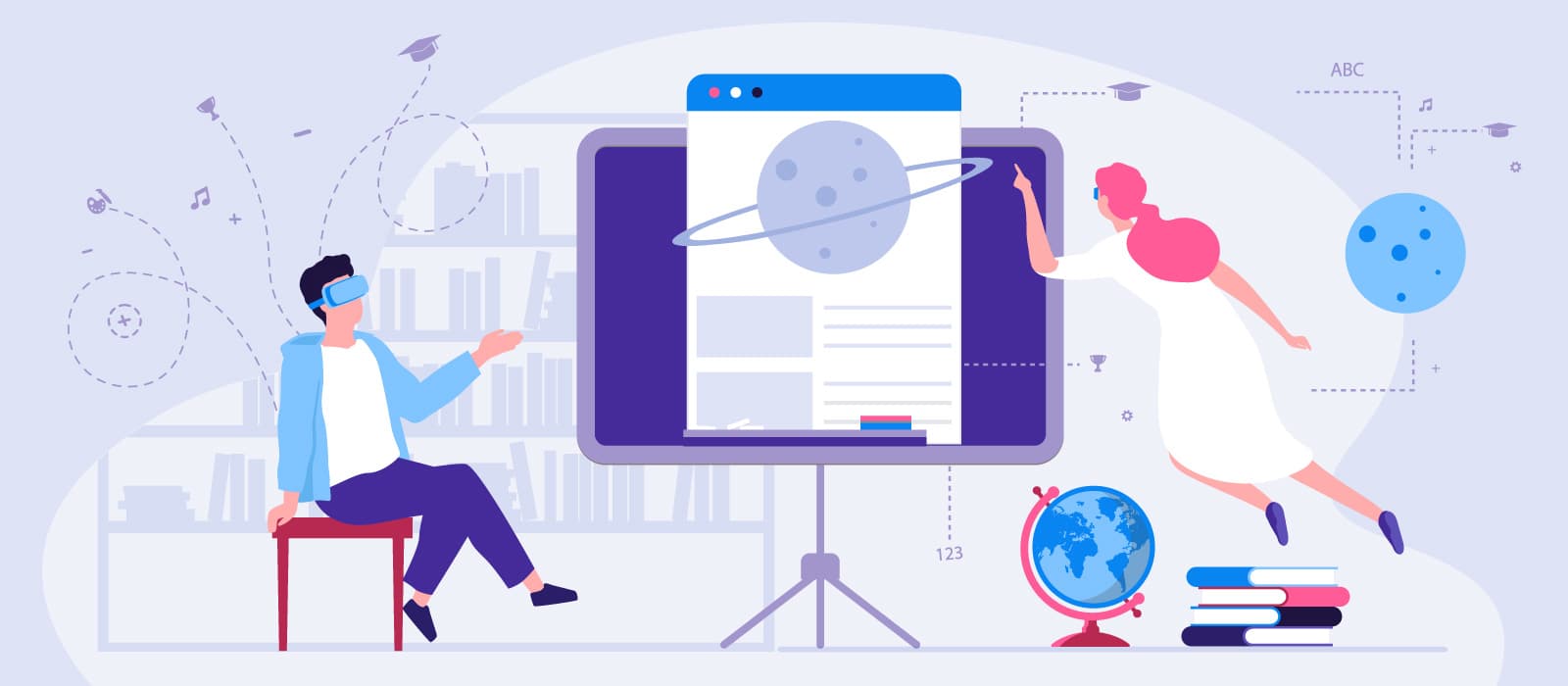
Virtual Reality (VR) is a rapidly advancing
technology that has the potential to revolutionize education and training. By
creating immersive and interactive experiences, VR enables learners to engage
with content in a whole new way, offering unique opportunities for skill
development, enhanced understanding, and engaging simulations. As educators and
trainers continue to explore the potential of VR, its impact on teaching and
learning is becoming increasingly evident.
One of the key advantages of VR in education is its
ability to provide immersive learning experiences. With VR, learners can be
transported to virtual environments that replicate real-world scenarios,
historical events, or scientific phenomena. Whether it's exploring ancient
civilizations, conducting virtual laboratory experiments, or practicing complex
procedures in a safe environment, VR allows learners to actively participate
and engage with the content, making the learning process more interactive and
memorable.
VR also offers a powerful tool for skill
development. Through virtual simulations, learners can practice and refine
their skills in a realistic and controlled environment. For example, medical
students can perform virtual surgeries, pilots can simulate flight scenarios,
and engineers can design and test prototypes. These hands-on experiences in VR
enable learners to gain practical knowledge, build muscle memory, and develop
critical thinking and problem-solving skills, which are essential in various
professional fields.
Moreover, VR enhances understanding by providing
visual and spatial context. Concepts and abstract ideas that are traditionally
challenging to grasp can be visualized and experienced in a three-dimensional
virtual space. This spatial understanding can deepen comprehension and
retention of complex subjects. For instance, students studying astronomy can
explore the solar system in VR, allowing them to visualize planetary movements
and formations in an immersive way.
Additionally, VR can cater to diverse learning
styles and individual needs. It offers flexibility in terms of pacing, personalization,
and adaptive feedback. Learners can progress at their own speed, revisit
content, and receive personalized guidance and feedback within the VR
environment. This individualized approach can improve learning outcomes and
cater to different learning preferences, making education more inclusive and
effective.
While the potential of VR in education and training
is promising, it is important to address certain challenges. Cost and
accessibility remain barriers to widespread adoption. VR hardware and software
can be expensive, and not all educational institutions or individuals have
access to the necessary equipment. However, as technology advances and becomes
more affordable, the availability of VR in educational settings is expected to
increase.
Another challenge is the need for quality content
and instructional design. VR experiences should be carefully designed to align
with educational goals, learning objectives, and curriculum standards. Creating
immersive and engaging content requires collaboration between educators,
subject matter experts, and VR developers to ensure the integration of
pedagogical principles and effective instructional strategies.
In conclusion, virtual reality has immense potential in transforming education and training. Through immersive learning experiences, skill development simulations, enhanced understanding, and personalized learning, VR offers a new dimension to teaching and learning. As the technology becomes more accessible and content development advances, we can anticipate a future where VR plays a significant role in classrooms, training centers, and beyond, empowering learners and educators to explore new frontiers of knowledge and skill acquisition.


Comments
Post a Comment